Why Manage Freight in Your CRM or ERP?
Why Managing Freight in Your CRM or ERP Makes Better Business Sense
For wholesalers, distributors, manufacturers and other businesses that ship physical products, freight is a critical part of the sales and fulfilment process.
But in many businesses, freight still sits in a completely separate system.
A customer places an order. Someone opens a carrier portal or freight platform, re-enters the delivery details, books the shipment, prints the label and then goes back to the original system to update the order.
It works, but it creates unnecessary double handling and makes mistakes more likely.
Freight management software works much better when it is connected directly to your CRM or ERP, alongside your customers, quotes, sales orders and inventory.
What is integrated freight management software?
Integrated freight management software connects your freight carriers, brokers or shipping platforms with the CRM or ERP software you already use to run your business.
Instead of treating freight as a separate process, it becomes part of your existing order workflow.
The customer details are already there. The delivery address is already there. The products, quantities and order information are already there.
Your team can use that information to quote and book freight without entering everything again.
Depending on your freight provider, an integrated freight system can also support shipping labels, tracking, manifests and other parts of the dispatch process.
Reduce double entry and freight errors
Every time someone copies information from one system into another, there is an opportunity for something to go wrong.
A delivery address gets mistyped. A contact is missed. The wrong customer is selected. Someone forgets to update the sales order after booking the freight.
Connecting freight management to your CRM or ERP removes much of that manual entry.
The information already captured during the sales and order process can flow through to freight, helping your team work faster while reducing avoidable mistakes.
Quote freight while you are quoting the customer
Freight is not just something that happens after the sale. It can have a significant impact on the cost and profitability of the order itself.
If your team has to jump between systems to calculate delivery costs, quoting becomes slower and it is easier to underestimate freight or forget to include it.
With freight quoting software connected directly to the sales order, your team can access freight pricing while they are working on the quote or order.
That means faster quoting, better information and fewer surprises when the order reaches dispatch.
Keep the customer, order and delivery together
A sales order should not disappear into a black hole once it reaches the warehouse.
Sales wants to know whether the order has gone. Customer service wants to know where it is. The warehouse needs the information to dispatch it. And the customer wants to know when it will arrive.
When freight management is connected to your CRM or ERP, the shipping process stays connected to the customer and order.
Instead of checking spreadsheets, carrier portals or asking another department, your team has better visibility of what is happening.
Make warehouse dispatch faster
For businesses processing dozens or hundreds of orders, even a few unnecessary steps on each shipment quickly add up.
Opening another freight system, searching for the customer, entering the address, entering shipment details and then updating the original order might only take a few minutes.
Multiply that across every consignment, every day.
Integrated freight management creates a much cleaner workflow:
Quote → Order → Pick → Pack → Book Freight → Print Label → Dispatch → Track
Freight becomes part of fulfilling the order rather than a separate administrative task.
Give sales and customer service better delivery visibility
One of the biggest benefits of connecting freight with your CRM is what happens after the goods leave the warehouse.
When a customer calls asking, “Where is my order?”, your team should not need to chase the warehouse or work out which freight company was used.
When tracking information is connected to the customer and order, the people dealing with customers have better access to the information they need.
That means faster answers for customers and less internal back-and-forth for your team.
Use your existing freight providers
Moving freight management into your CRM or ERP does not necessarily mean changing freight providers.
A good shipping integration should allow you to connect the carriers, freight brokers or multi-carrier platforms you already use.
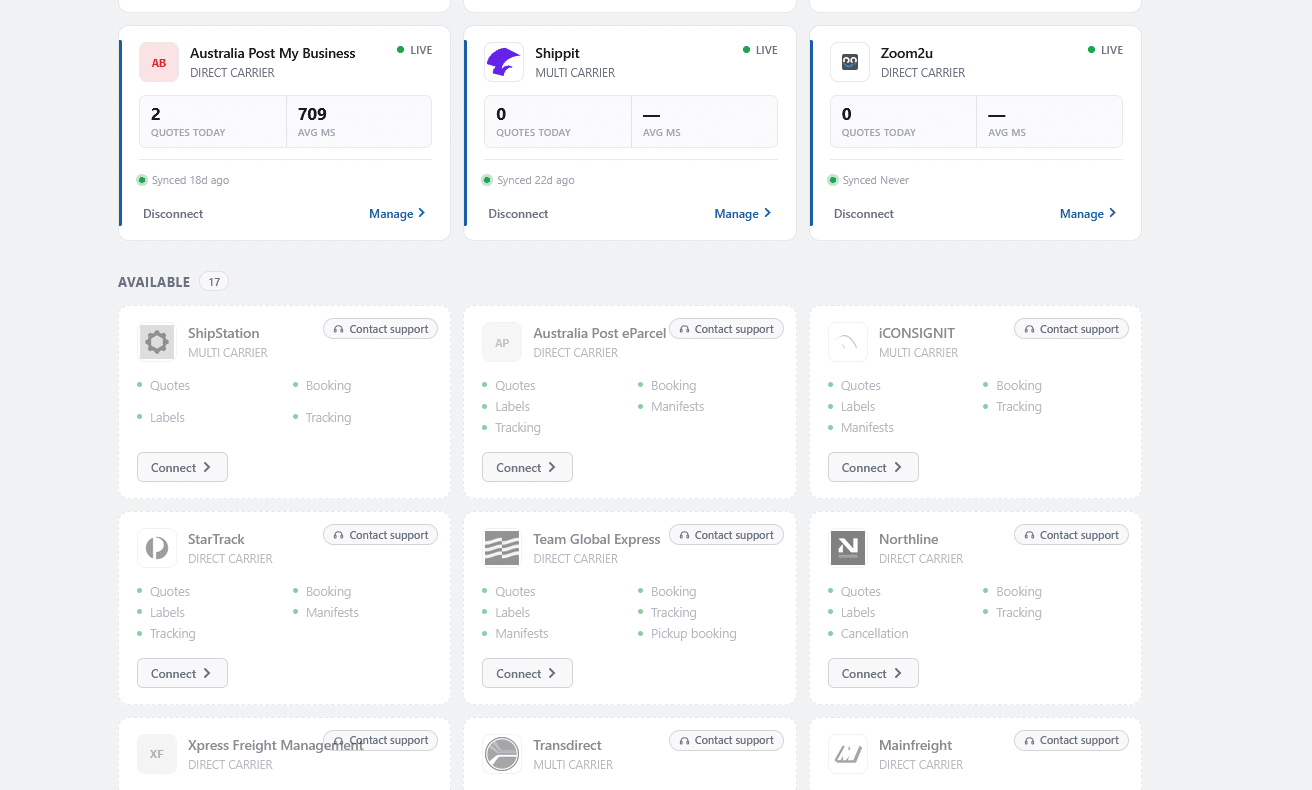
That is the approach we have taken with Tall Emu Universal Freight Hub.
Freight Hub connects Tall Emu with a growing range of Australian and New Zealand freight carriers, brokers and shipping platforms.
You keep your existing freight relationships. Tall Emu connects them to the rest of your business workflow.
Why freight belongs in your CRM or ERP
Businesses have spent years adding separate software to solve individual problems.
One system manages customers. Another manages stock. Accounting sits in MYOB or Xero. Freight sits in a carrier portal or shipping platform.
The problem is that every disconnected system creates another place for information to live and another handover for your team to manage.
Tall Emu takes a different approach.
Your customers, leads, quotes, sales orders, inventory, purchasing, manufacturing, jobs and freight can all be managed as part of the same connected workflow.
Because freight is not an isolated process.
It is simply the next step in fulfilling the order you have already created.
Manage freight directly in Tall Emu
Tall Emu Universal Freight Hub brings freight quoting, consignment creation, shipping labels, tracking and manifesting directly into Tall Emu, with available functions depending on your freight provider.
Create the order once, then use the information already in Tall Emu to manage what happens next.
No re-keying customer and delivery information into another system. No disconnected freight process. Better visibility from quote through to delivery.
Every Tall Emu customer receives 20 consignments per month free, with paid Freight Hub plans available for businesses shipping higher volumes.